Drug Delivery Systems — Polymers & Microspheres
Controlled release, microencapsulation and polymer-based drug delivery
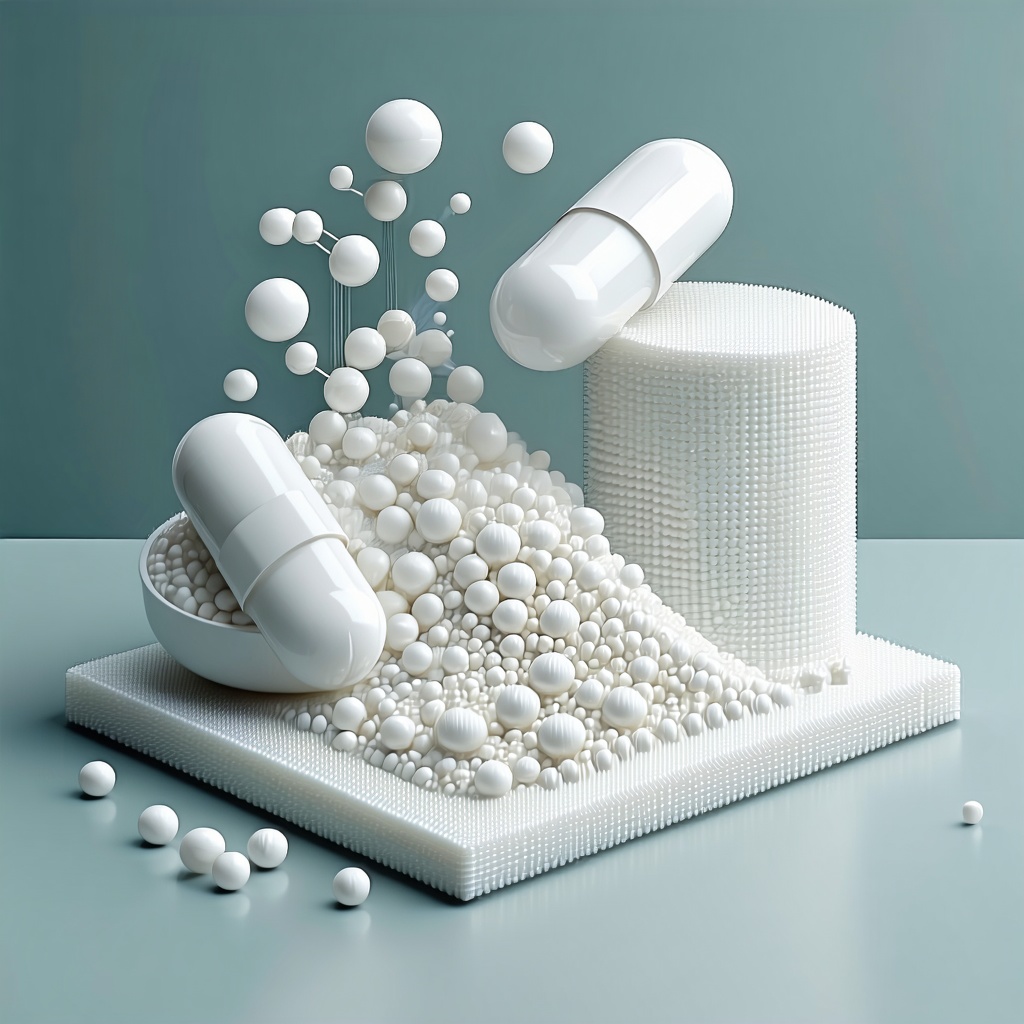
Modern drug delivery is far more sophisticated than simply giving a tablet. Polymers, coatings, and microparticle systems allow precise control over where, when, and how fast a drug is released — improving safety, efficacy, and patient adherence.
What are Drug Delivery Systems?
Drug delivery systems are formulation strategies that control how and when a drug is released in the body. Polymers are the key building materials — they can be natural (alginate, gelatin, shellac), semi-synthetic (HPMC, cellulose derivatives), or synthetic (PLGA, Eudragit). By choosing the right polymer, formulators can design tablets that dissolve in the small intestine rather than the stomach, capsules that release drug slowly over 24 hours, or injectable depots that release drug over weeks or months.
Why Use Controlled Release?
Controlled-release formulations offer several advantages: taste masking (coating bitter drugs so they can be swallowed), protecting drugs from stomach acid (enteric coating), targeting drug to a specific part of the gut (e.g. colon for inflammatory bowel disease), extending release for once-daily dosing, reducing peak-related side effects, and improving patient adherence. Without controlled release, many drugs would need to be taken multiple times a day or would be destroyed before reaching their target.
Microspheres and Microencapsulation
Microspheres are tiny polymer spheres ranging from 1 to 1000 micrometres in diameter that contain a drug inside. They can be injected as depot formulations — releasing drug slowly over weeks or months — making them ideal for long-acting treatments. Examples include Lupron Depot (leuprolide acetate, used in prostate cancer and endometriosis) and Nutropin Depot (growth hormone). Microspheres are also studied as vaccine delivery systems, as they can protect antigens, target immune cells, and mimic a slow release that acts like a booster dose.
Types of Release Systems
There are several classes of controlled-release system. Reservoir systems have a drug core surrounded by a polymer membrane — drug diffuses through at a constant rate (zero-order release). Matrix systems have drug dispersed throughout a polymer — drug release slows over time as it has further to diffuse (follows Higuchi model: proportional to square root of time). Bioerodible systems (like PLGA) degrade after use — no removal needed. pH-responsive systems dissolve only above a certain pH. Careful evaluation of the right system for a given drug and clinical need is key to successful formulation design.