Scabies
Highly contagious skin mite infestation — recognition and treatment
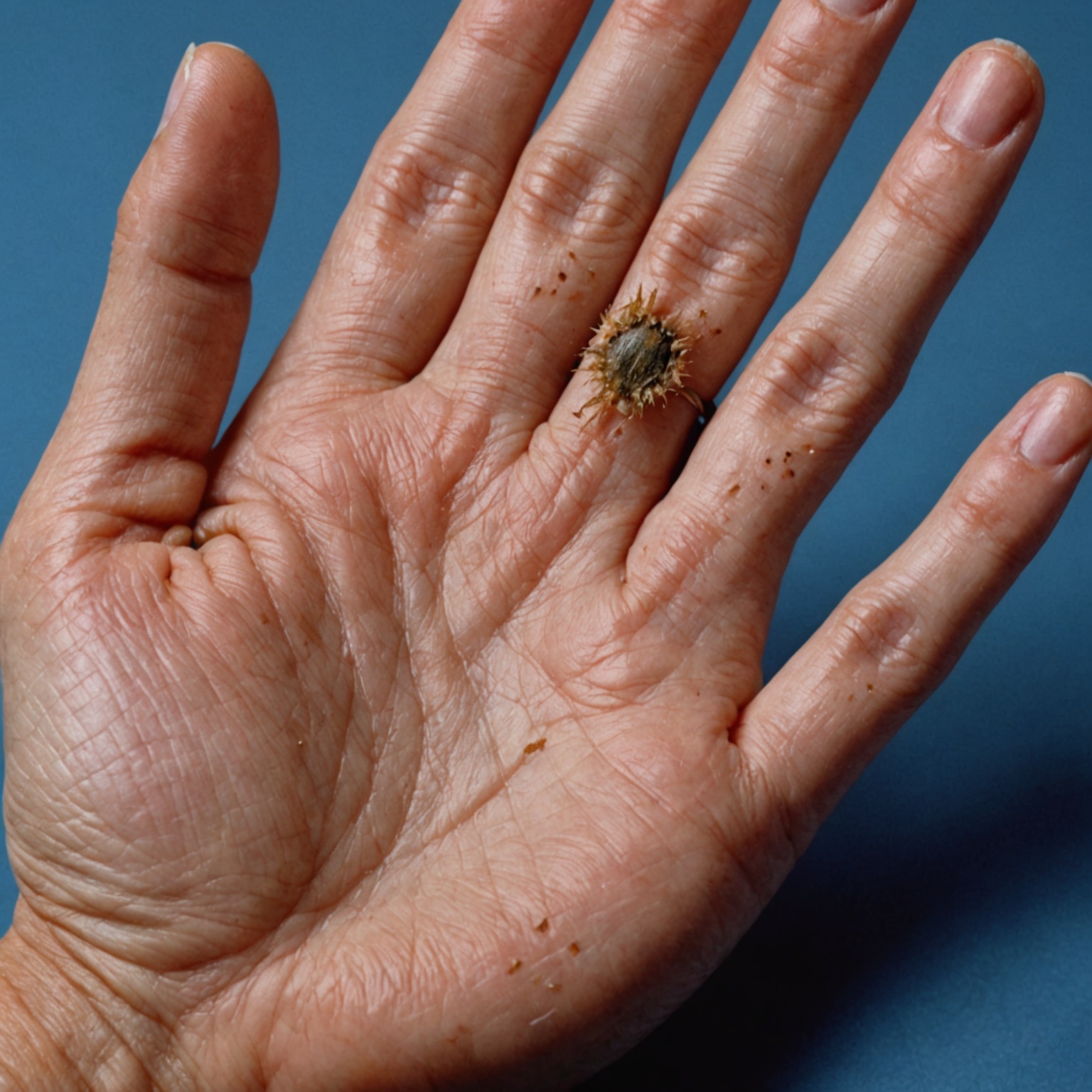
Scabies is a highly contagious skin condition caused by a tiny mite called Sarcoptes scabiei. It spreads through prolonged skin-to-skin contact and causes intense itching, particularly at night. Scabies is easily treated, but all household and close contacts must be treated at the same time to prevent reinfection.
What is Scabies?
Scabies is caused by the Sarcoptes scabiei mite — a microscopic parasite that burrows into the outer layer of the skin to lay its eggs. The immune response to the mites, their eggs and their faeces causes intense itching and a characteristic rash. Scabies affects people of all ages, backgrounds and levels of hygiene. It is common in care homes, schools, prisons and households where people live in close proximity. The mite cannot survive for more than 2–3 days away from the human body, so transmission requires prolonged direct skin contact rather than brief touching.
How it Spreads
Scabies spreads primarily through prolonged skin-to-skin contact — typically longer than 10 minutes of direct contact. Sexual contact is a common route of transmission in adults. It can also spread within households through sharing a bed or holding hands for extended periods. Brief contact such as a handshake is unlikely to transmit scabies. Indirect spread through clothing, bedding or towels is possible but less common. The incubation period is typically 2–6 weeks in people who have not had scabies before. In people who have had scabies previously, symptoms can develop within 1–4 days due to sensitisation from prior exposure.
Signs & Diagnosis
The hallmark symptom of scabies is severe itching that is typically worse at night. The rash consists of tiny spots, small blisters and burrows — fine wavy grey or skin-coloured lines in the skin where the mite has tunnelled. Burrows are most commonly found between the fingers, on the wrists, in the armpits, around the nipples, on the buttocks and genitals. In infants and young children, burrows may also appear on the scalp, face, neck, palms and soles. Diagnosis is usually clinical.
Treatment & Contacts
Treatment is straightforward but requires meticulous application. The entire body from the neck downwards (including all skin folds, under the nails and between the toes) must be treated. In infants, the elderly and immunocompromised individuals, the scalp and face must also be treated. All household and close physical contacts must be treated on the same day, regardless of whether they have symptoms — evaluation of household contacts for signs and symptoms is an essential part of scabies management to prevent ongoing transmission and reinfection. Wash all clothing, bed linen and towels at 60°C on the day of treatment. Items that cannot be washed should be sealed in a plastic bag for at least 72 hours. It is normal for itching to persist for 4–6 weeks after successful treatment — this does not mean treatment has failed.