STEMI (ST-Elevation Myocardial Infarction)
Emergency management of ST-elevation heart attack — primary PCI, thrombolysis and secondary prevention
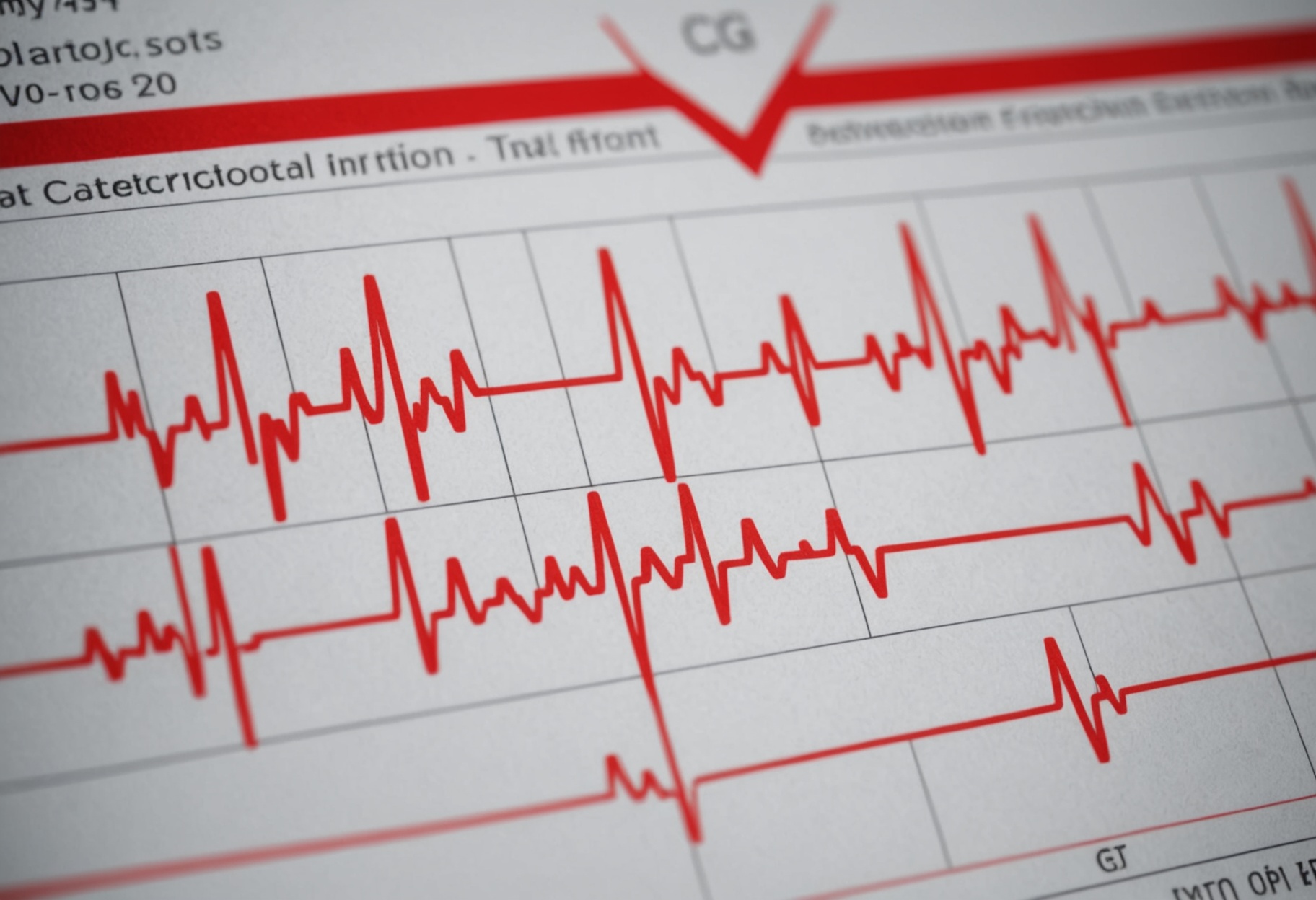
STEMI (ST-Elevation Myocardial Infarction) is the most serious form of heart attack, caused by complete occlusion of a coronary artery. It is defined by ST elevation of ≥1mm in two or more contiguous leads, or new left bundle branch block (LBBB) on ECG. Time is muscle — every minute of delay causes irreversible myocardial death. Primary PCI is the gold-standard treatment, targeting restoration of coronary blood flow within 120 minutes of first medical contact. (NICE NG185, 2020)
What is STEMI?
STEMI occurs when a coronary artery is completely blocked, most commonly by rupture of an atherosclerotic plaque followed by acute thrombus formation. Full-thickness (transmural) myocardial injury results, visible as ST elevation on ECG in ≥2 contiguous leads, or new left bundle branch block (LBBB). Without prompt reperfusion, large areas of heart muscle die permanently. The hallmark ECG changes distinguish STEMI from NSTEMI and guide immediate management decisions.
Emergency treatment — primary PCI
Primary PCI (percutaneous coronary intervention — balloon angioplasty with stent) is the gold-standard treatment for STEMI (NICE NG185). The target is to open the blocked artery within 120 minutes of first medical contact, or within 90 minutes of hospital arrival. An aspirin 300 mg loading dose is given immediately, followed by a P2Y12 inhibitor — ticagrelor 180 mg (preferred) or prasugrel 60 mg. Anticoagulation with unfractionated heparin or bivalirudin is given during the procedure.
When PCI is not available — thrombolysis
If primary PCI cannot be performed within 120 minutes, thrombolysis (fibrinolytic therapy) must be given as soon as possible — ideally within 30 minutes of hospital arrival. Tenecteplase (TNKase) is the preferred fibrinolytic agent in the UK. After successful thrombolysis, the patient should be transferred to a PCI centre for coronary angiography within 3–24 hours. Thrombolysis should not be given if >12 hours have elapsed since symptom onset, or in the presence of contraindications (recent surgery, active bleeding, previous haemorrhagic stroke).
Medicines after STEMI
Following STEMI, a combination of medications is essential to protect the heart and prevent further events: Dual antiplatelet therapy (aspirin 75 mg lifelong + ticagrelor 90 mg BD or clopidogrel 75 mg OD for 12 months); high-intensity statin (atorvastatin 80 mg); ACE inhibitor (ramipril — especially if LVEF <40%); beta-blocker (bisoprolol); and eplerenone if LVEF ≤35% with heart failure or diabetes. All medicines should be started within 24 hours of STEMI and continued long-term. Never stop heart medicines without medical advice.
Secondary prevention and cardiac rehabilitation
After STEMI, attending cardiac rehabilitation — a structured programme of supervised exercise and education — reduces the risk of a further heart attack by up to 26% (NICE NG185). Driving restrictions apply: DVLA requires a minimum of 4 weeks off driving after STEMI managed medically or with CABG; 1 week if uncomplicated primary PCI was successful. Lifestyle changes are critical: stop smoking (most important single change), follow a Mediterranean diet, be physically active and maintain a healthy weight. All content based on NICE NG185 (2020) evaluated guidelines.